Location: Berlin
Period: 2020 to 2023
Category: New build | turnkey construction
Client: Invalidenstraße 5 GRAFT Designhaus GmbH Krückeberg, Putz, Willemeit GbR Berlin
Area: 1,370 m²
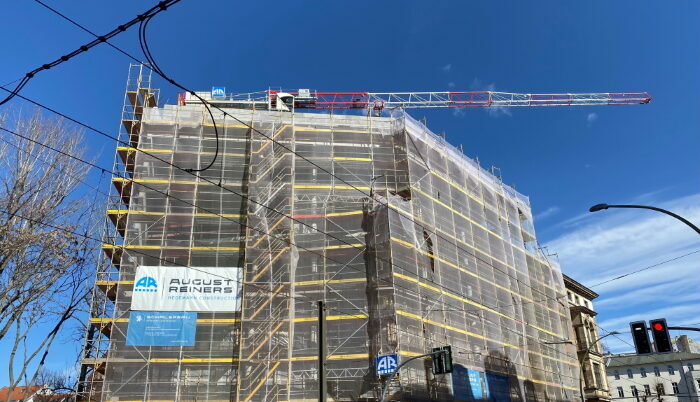
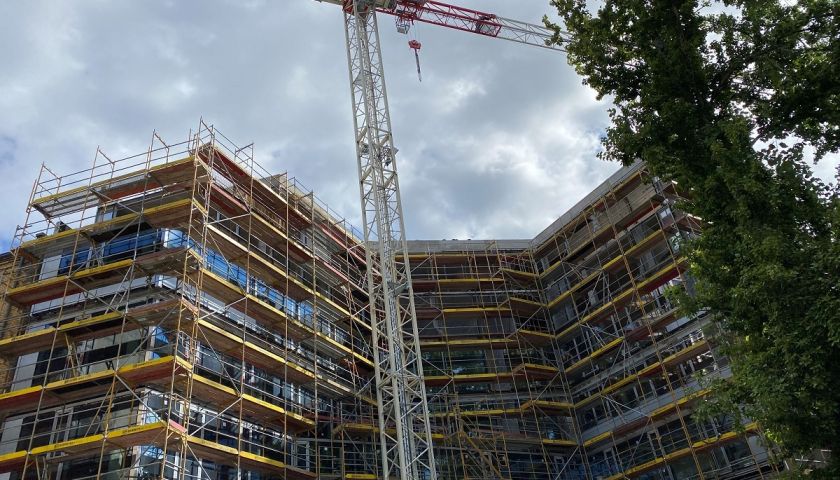
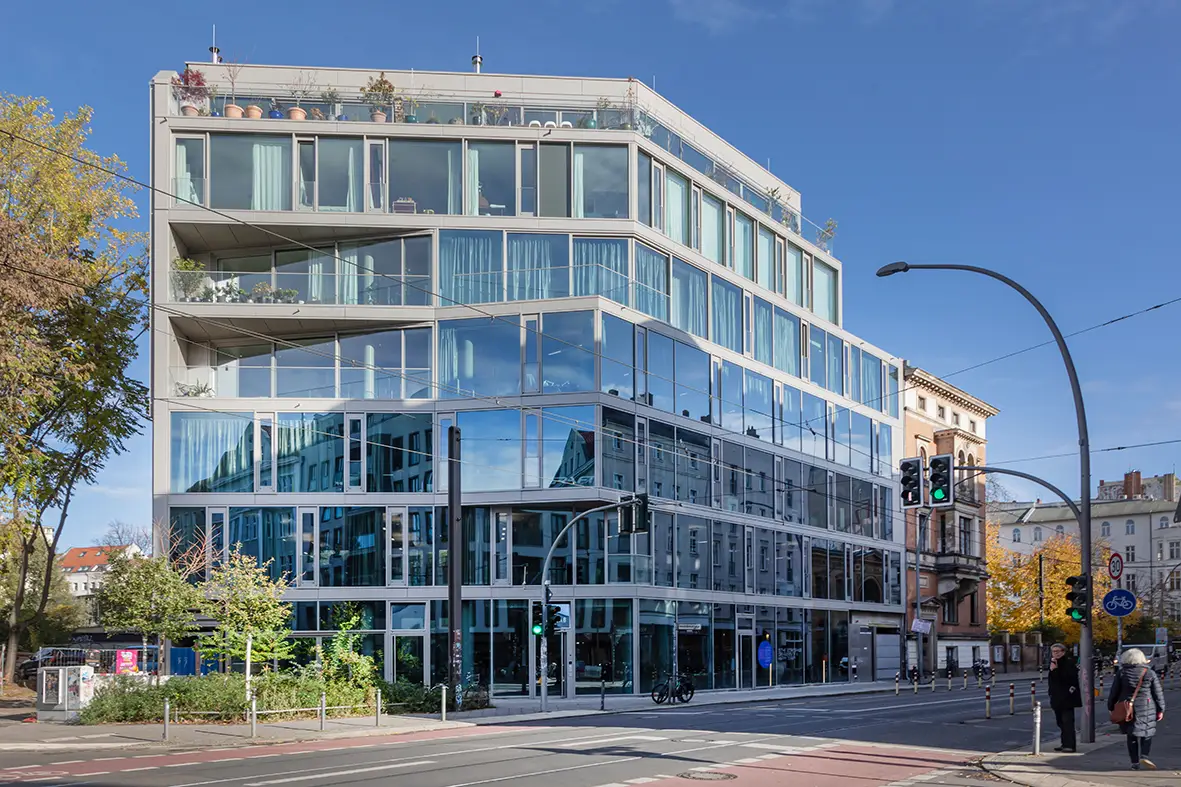
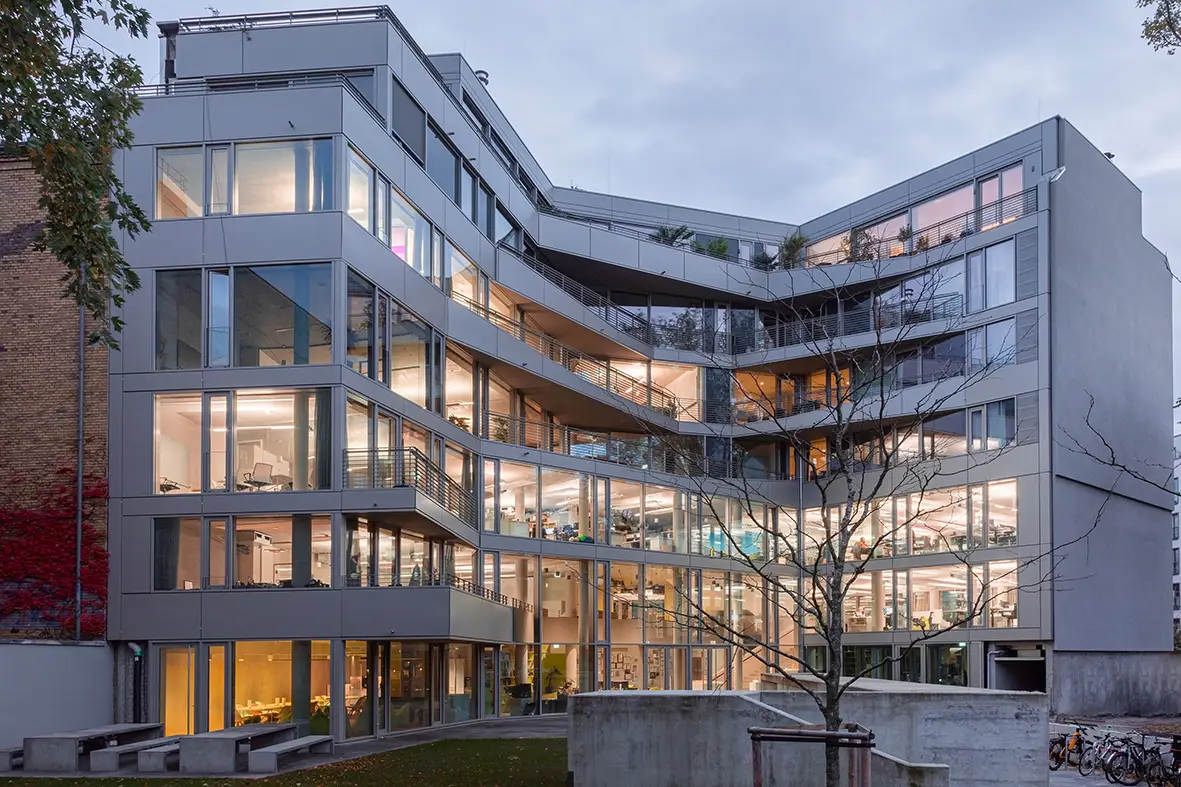
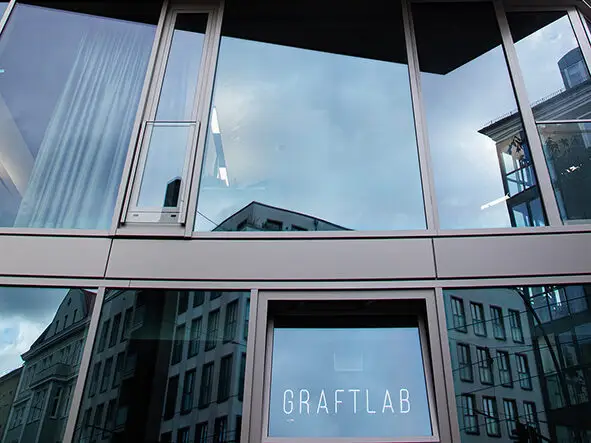
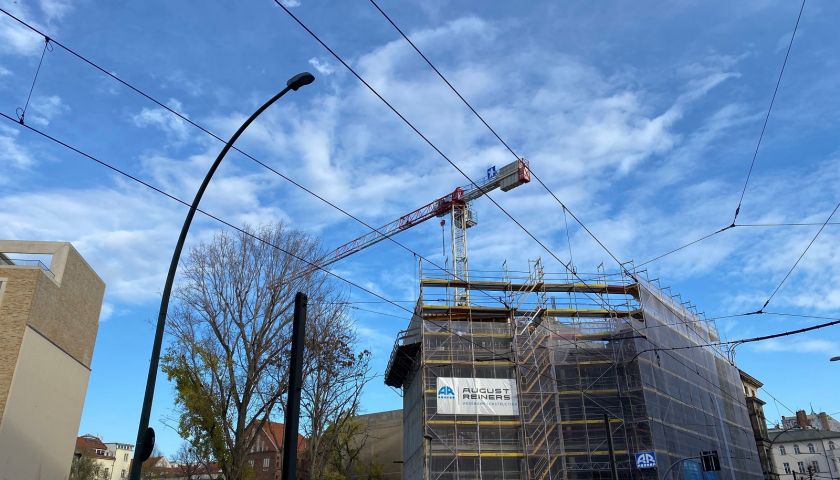
A residential and commercial building including underground parking and outdoor facilities was built for GRAFT Architekten at Invalidenstrasse 5 in Berlin-Mitte. The 1,370 m² property is located directly at the intersection of Invalidenstraße and Ackerstraße. The building consists of a first floor, 5 full storeys, a staggered storey and a basement. The six storeys of the so-called “GraftLab” house the office space of the GRAFT architecture firm, other office communities from the architecture and creative scene, commercial units and several apartments.
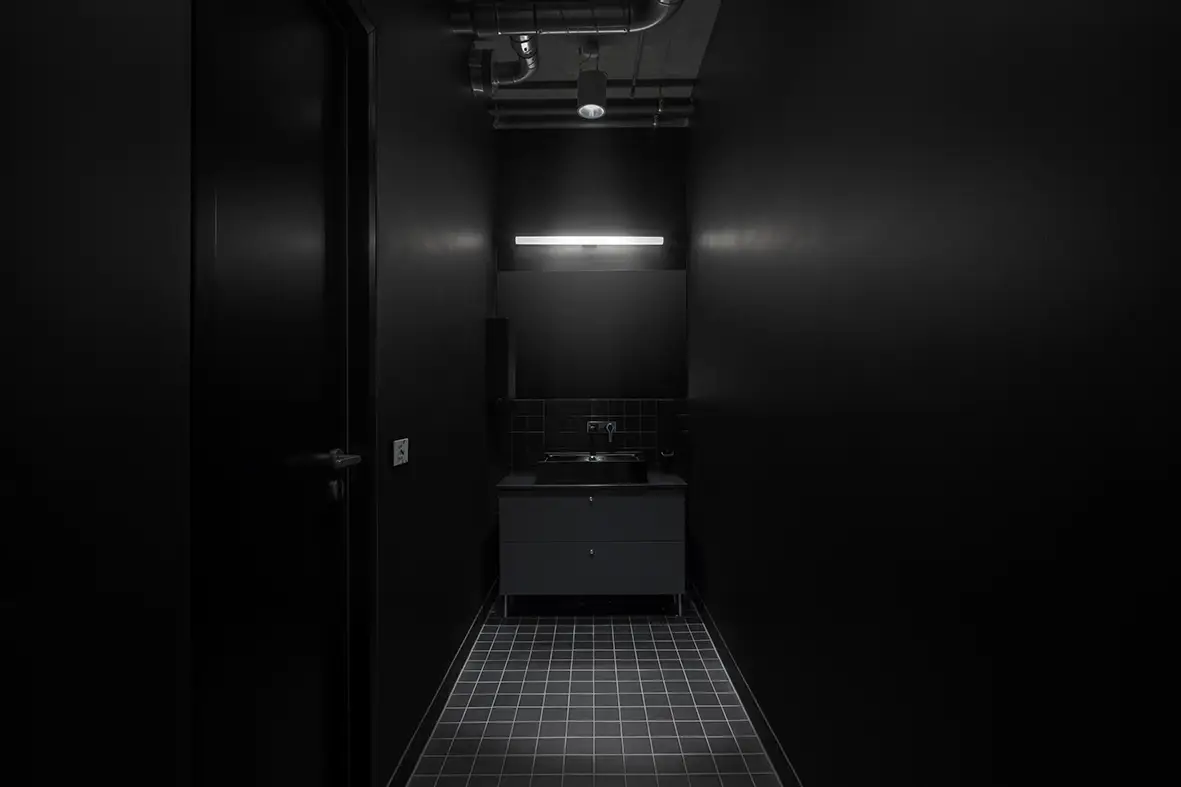
Commercial units are planned on the first floor, which are accessible from both Invalidenstrasse and the adjacent Ackerstrasse. The office floors extend from the ground floor to the 4th floor. The new Berlin headquarters of GRAFT Gesellschaft von Architekten mbH is located on the lower office floors. Functional rooms such as kitchenettes, toilets, telephone booths and storage and server rooms are aligned with the eastern gable wall on all office floors. Modern working environments with numerous meeting rooms for different team sizes and usage requirements are being created on the four office floors. Transparent glass partitions structure the spaces and create an open, light-flooded atmosphere.
On the 3rd and 4th floors, in addition to the office space, a residential unit is arranged between the street and courtyard façades. On the 5th and 6th floors (top floor), three maisonette apartments are connected via an internal staircase across both levels. In addition, three further smaller residential units (studios) were created on the 5th floor.
The supporting structure was designed as a monolithic reinforced concrete skeleton construction. The gable wall facing the existing building was mainly made of cavity wall elements. The façade was realized as a mullion-transom aluminium-glass construction with rear-ventilated aluminium sheet cladding. The high transparency of the outer shell allows natural lighting even with deep floor plans and thus makes a sustainable contribution to the energy balance. The exterior walls on the gable ends were fitted with a thermal insulation composite system.
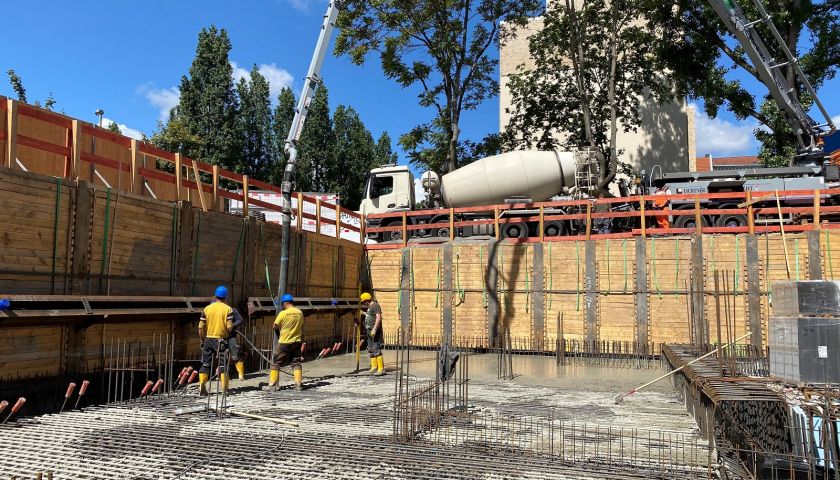
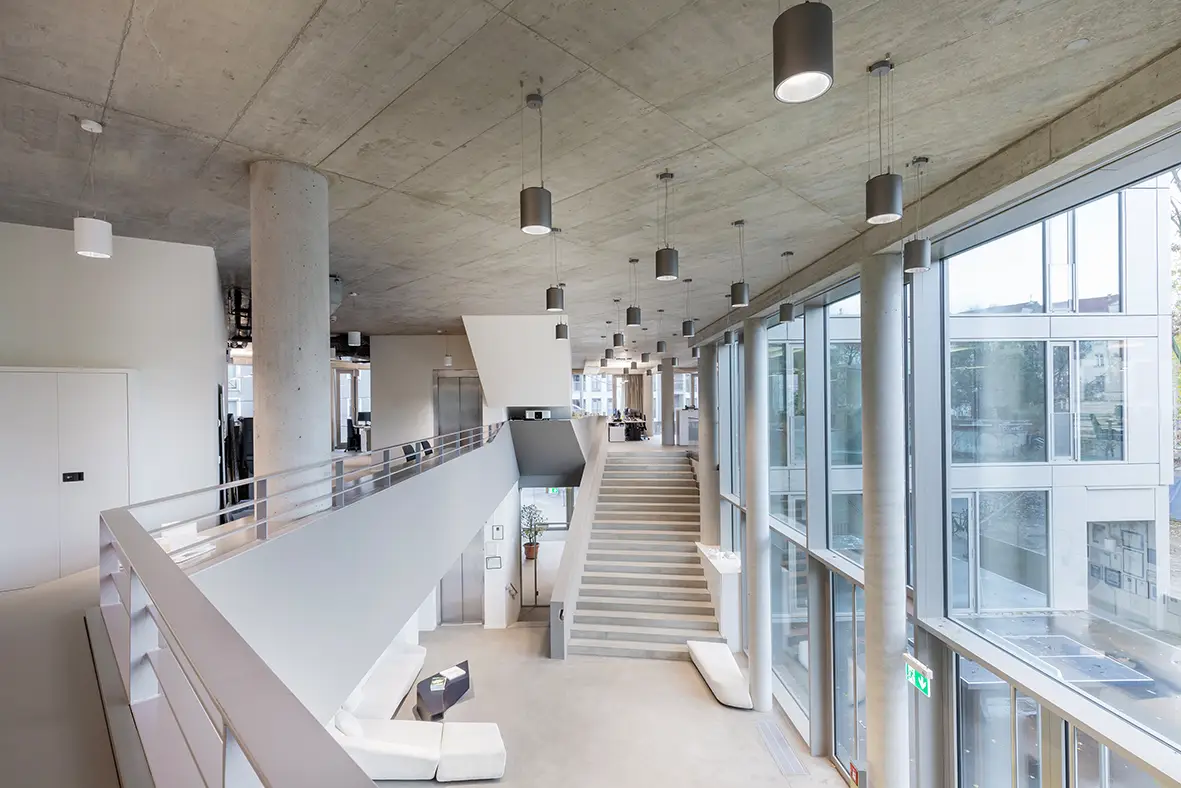
The foundation was a shallow foundation. The basement was constructed as a white tank. The staircase was constructed as a continuous reinforced concrete structure and was routed from the basement through all floors to the top floor in one go.
The open-plan offices offer access to the outdoors on all levels. Additional internal staircases and communication areas merge the three office levels into a single unit with maximum flexibility.
Large areas of exposed screed and exposed concrete were used in the rooms. The walls and floors in the conference area on the 4th floor were given a PU coating. These meeting and conference rooms can be flexibly partitioned using mobile partition wall systems and a large-format pivot door (door leaf dimensions: approx. 2.20 m/ 3.00 m).
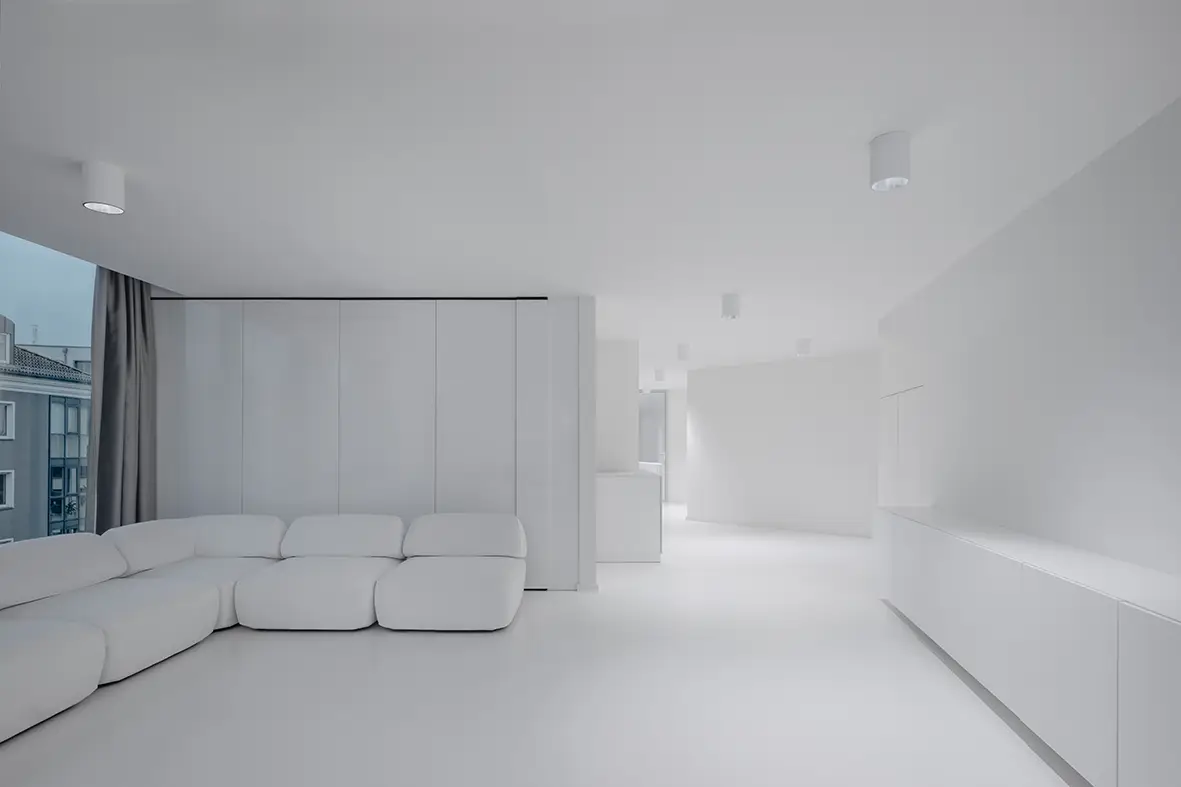
The interior fit-out of the offices and apartments will be tailored to the design of the building. All apartments also have several exits to the outside.
The building’s balconies are firmly integrated into the façade design and emerge directly from the floor plans of the interior spaces. They create flowing transitions between the interior and exterior areas. The stepped projections and recesses of the façade create a dynamic, structured exterior view that offers the residents both privacy and a place to retreat. The varied design of the balconies and façade contours emphasizes the L‑shaped structure as a striking, modern building that blends harmoniously between the lively street side and the quiet inner courtyard.
Each apartment has been individually designed and features different design concepts and high-quality fittings, including several bathrooms and special elements such as jacuzzis and green roof terraces. The apartment partition walls were made of solid materials. Exposed concrete surfaces, floating heated screeds and 2‑layer parquet were used in the interiors. Wall and floor coverings were selected to match the furnishings and function of the rooms.
The roof above the top floor is designed as a flat roof construction with extensive greenery.
The underground parking garage was lowered for the outdoor facilities concept and provided with intensive greenery, which enables a flowing landscape transition to the existing green space to the north. For sustainable rainwater management, the underground car park ceiling will be fitted with a restrictive roof for rainwater retention as required.