Location: Hamburg
Timeframe: 2021 to 2028
Client: DEGES
Construction: Hafenbahntunnel Joint Venture – AUGUST REINERS Bauunternehmung GmbH (TGF) | Bauer Spezialtiefbau GmbH (KGF)
Detailed design: Ramboll Deutschland GmbH
Construction method: Open-cut construction
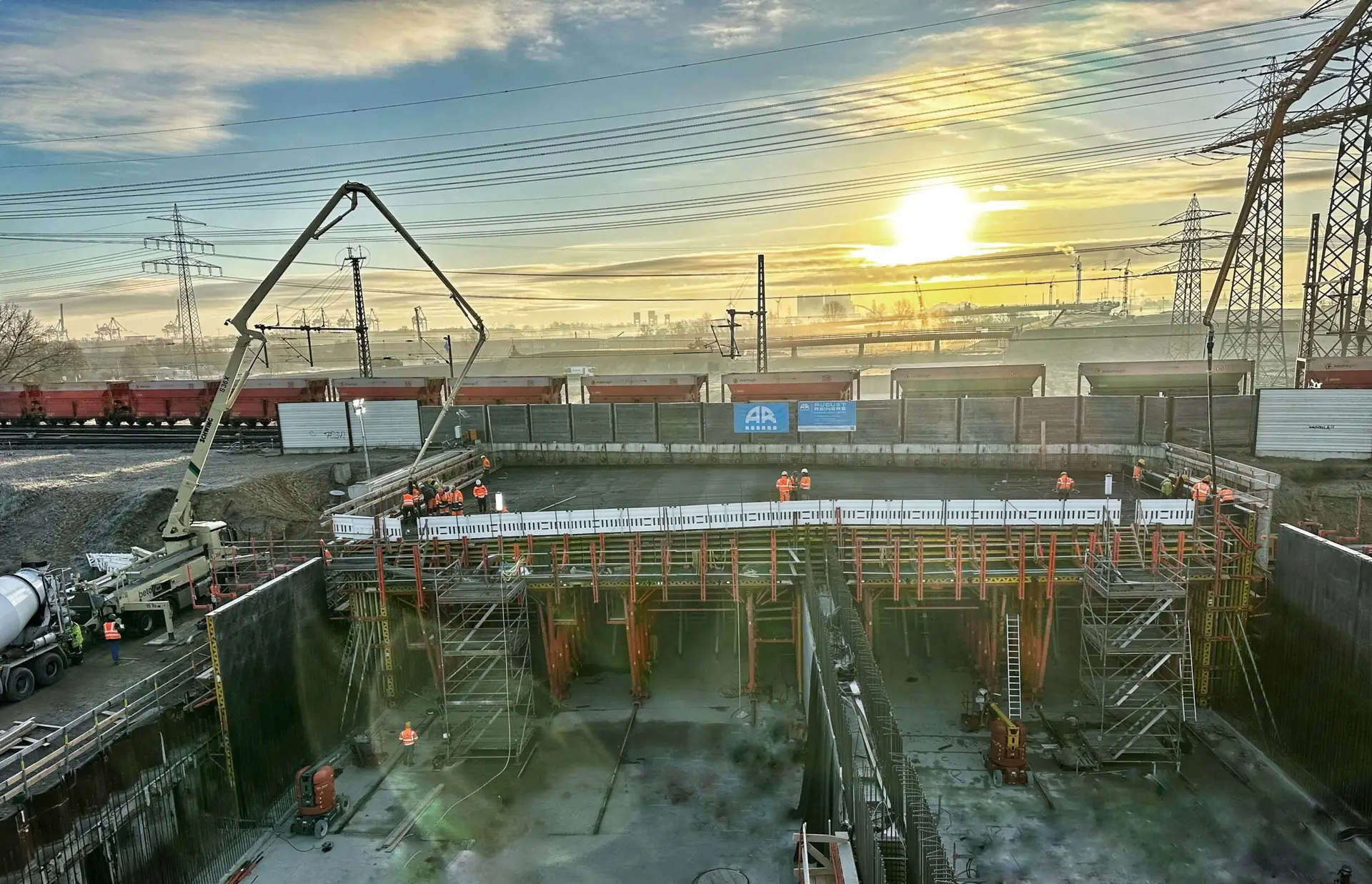
Construction Phase 4 of the A26 will create a connection between the Hamburg/Lower Saxony state border and the A7. Part of this phase is the Hafenbahn Tunnel, through which the future A26 will pass under the tracks of the Hamburg Hafenbahn.
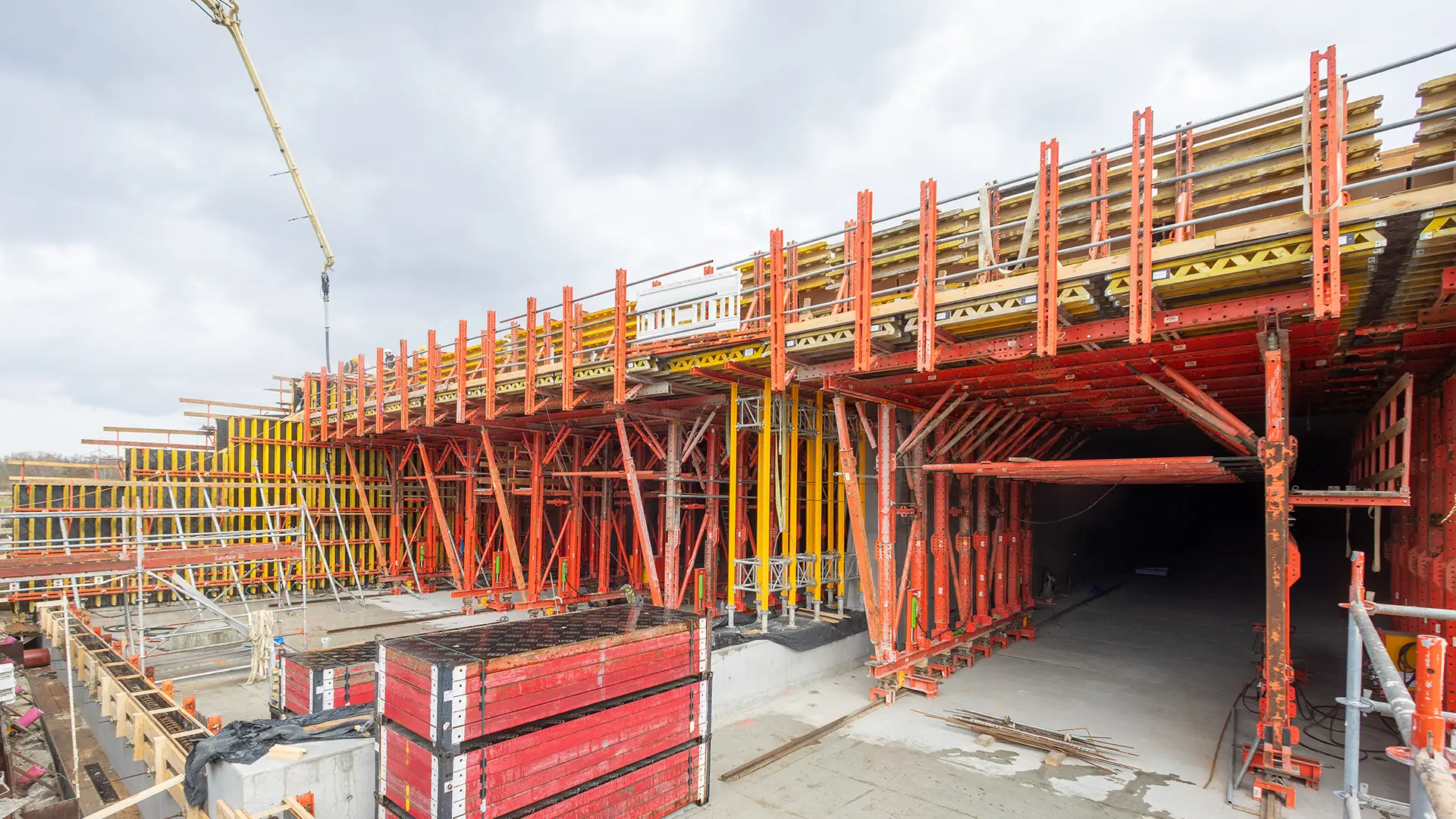
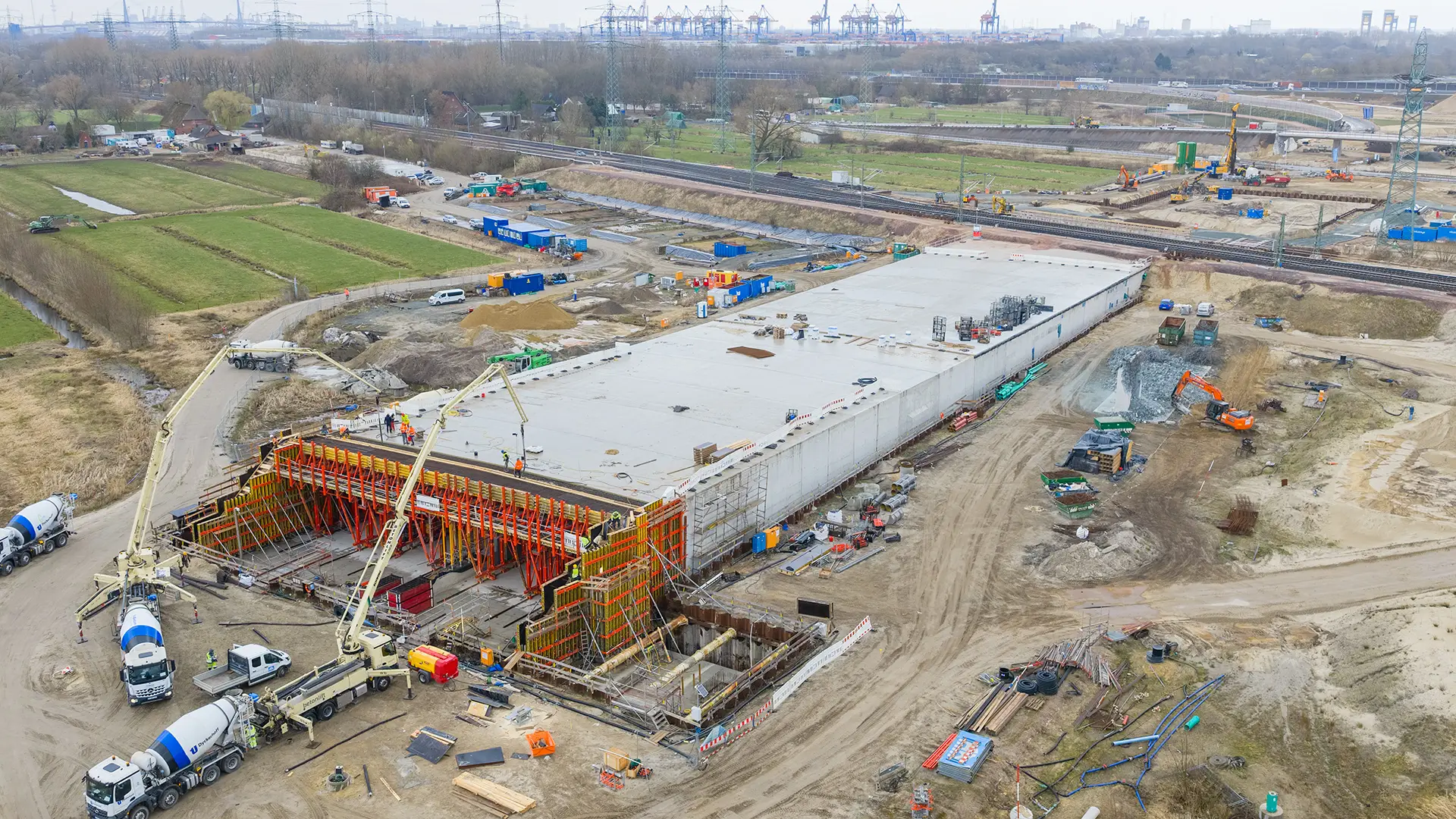
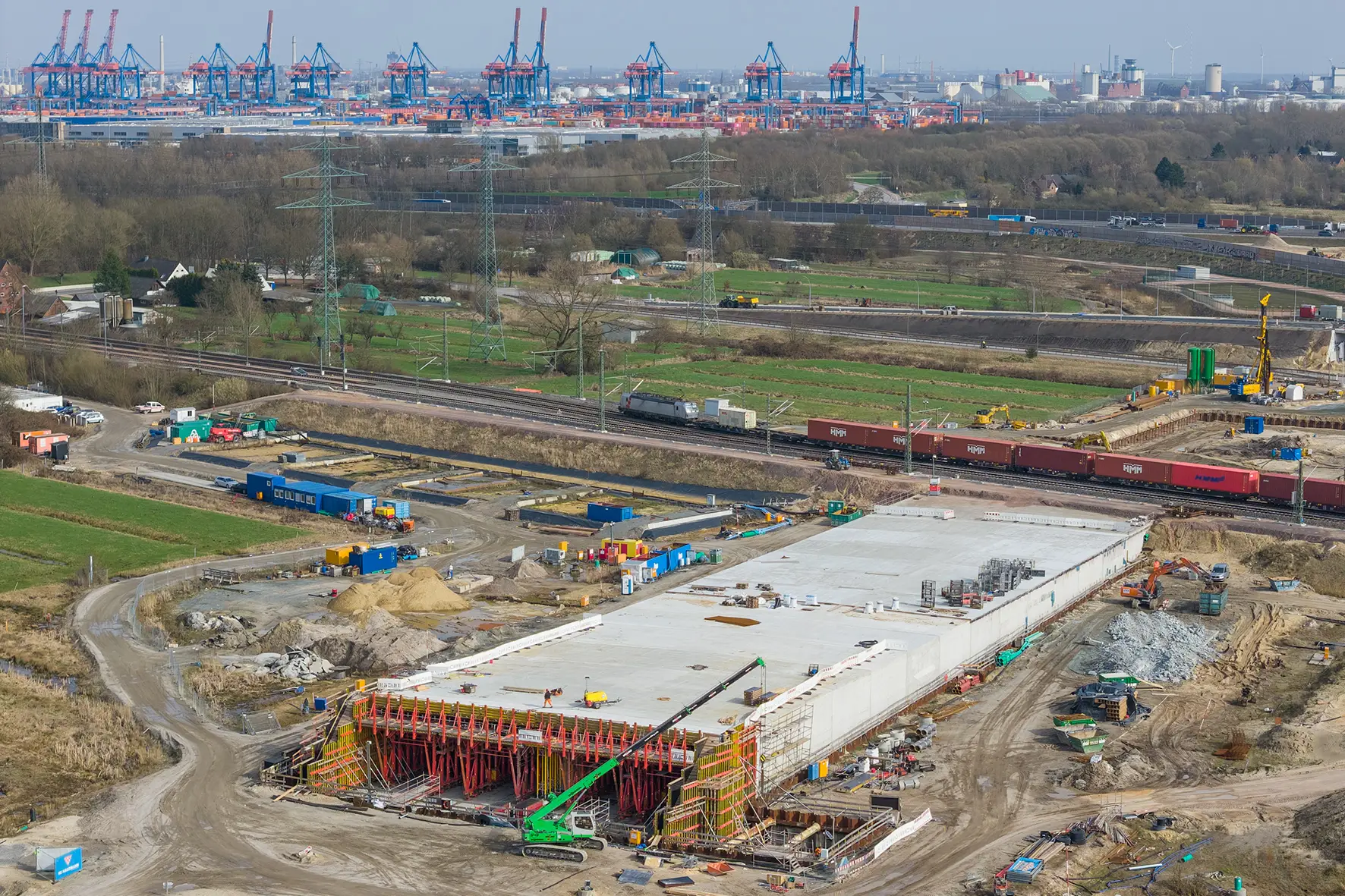
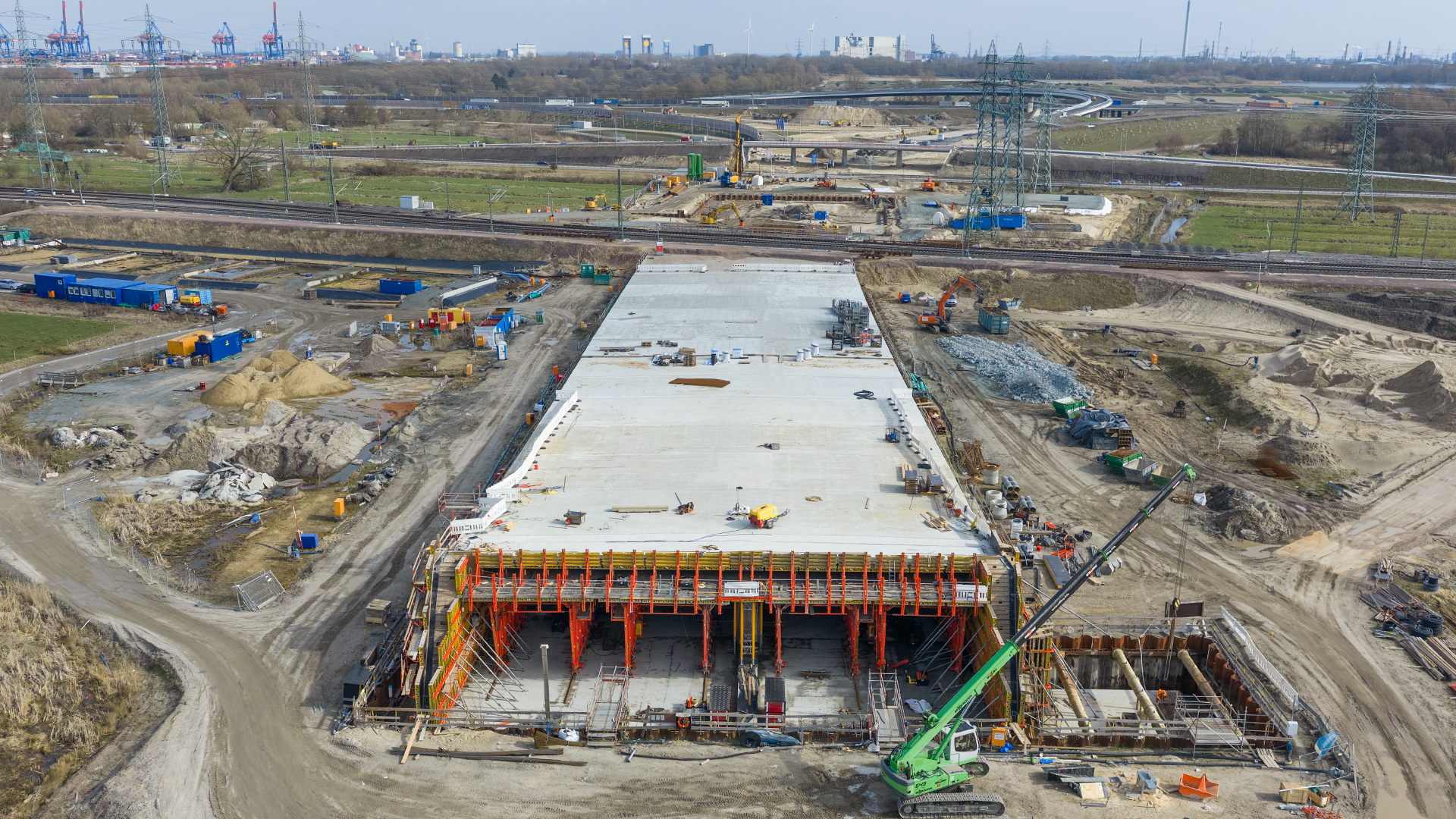
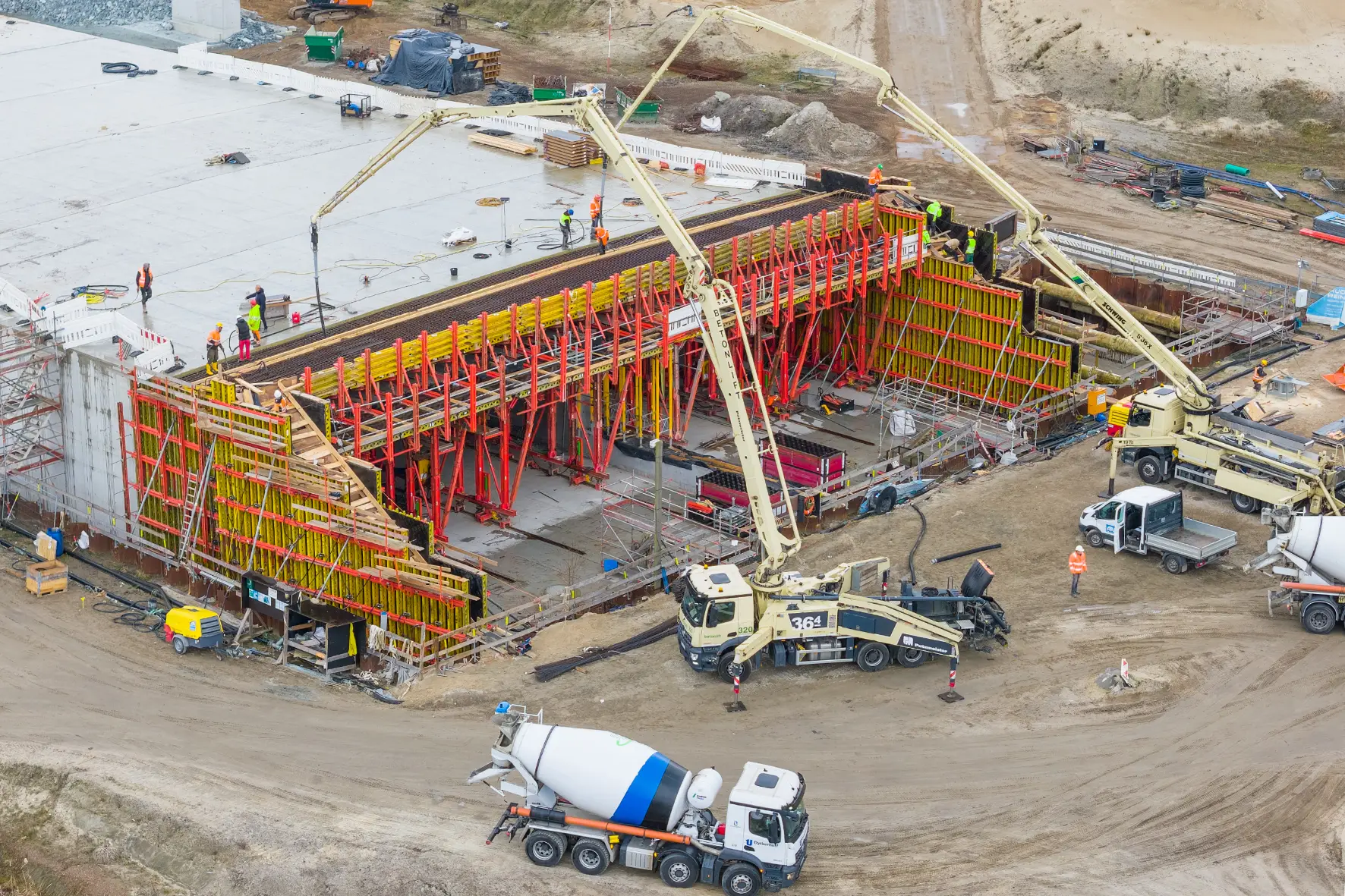
At km 0+590, the A26 route crosses the Hausbruch–Waltershof port railway line. Here, a two-cell tunnel structure approximately 200 m long is being constructed from waterproof concrete using the “white box” principle. To the east, it connects to a trough ramp approximately 70 m long; to the west lies the portal area.
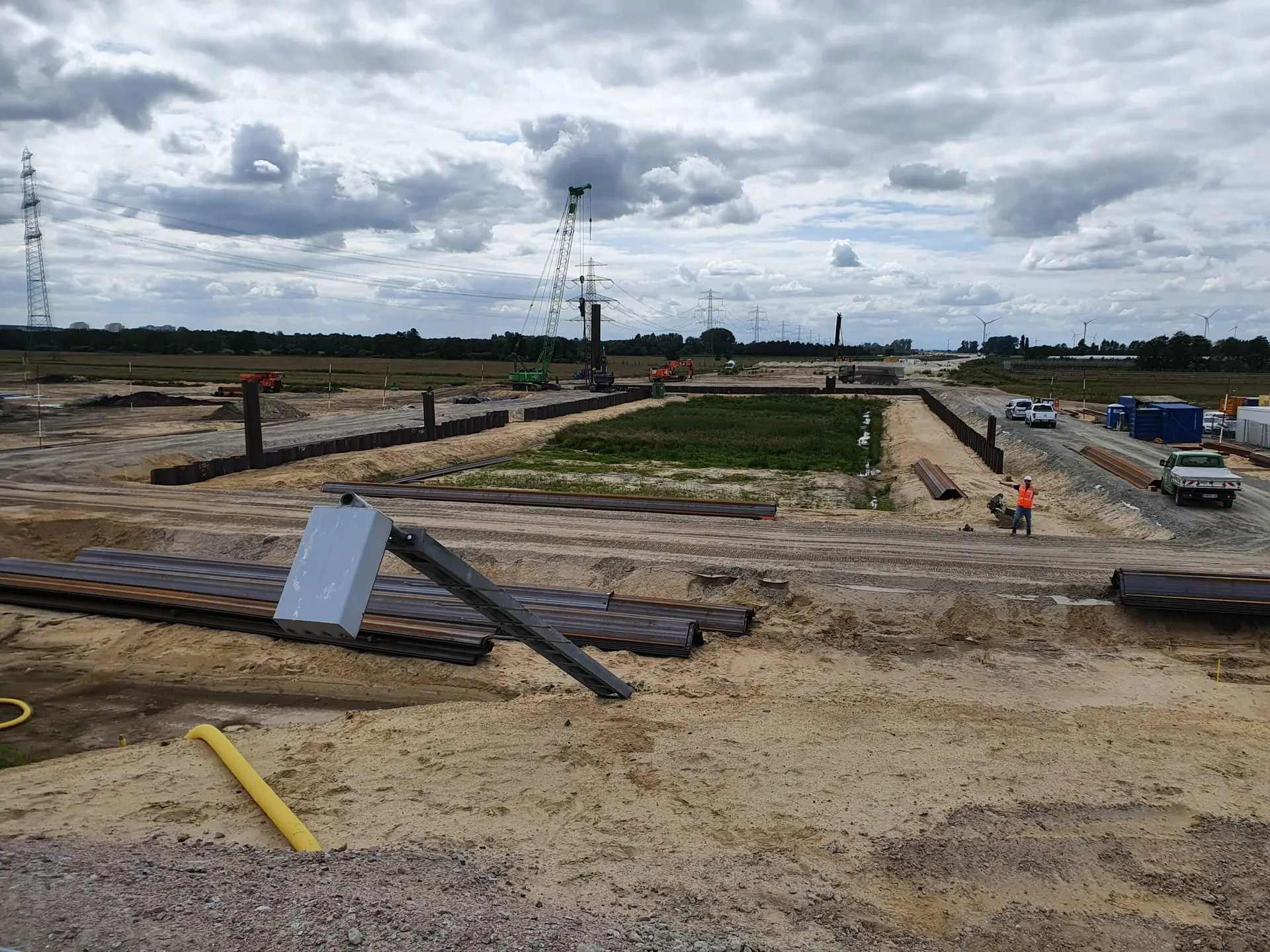
The unique geotechnical conditions and groundwater situation represent one of the key challenges in the construction of the Hafenbahn Tunnel and play a decisive role in determining the chosen construction methods and the construction schedule. In particular, dewatering, soil management, and ground improvement pose significant technical and logistical challenges throughout the entire construction period. The subgrade, which consists primarily of peat and silt, has only a low bearing capacity. Extensive measures to improve the subgrade and to create stable working surfaces and construction roads are therefore necessary even for site operations.
The excavation pits will be enclosed using sheet piles, and bored pile walls will be used in the area of the existing harbor railway embankment. Inside the excavation pits, the non-bearing soil will then be excavated using the wet dredging method. Divers are used to dredge the bottom of the excavation pit and prepare it for further work. The resulting mixture of soil and water is treated and separated through a complex process. This involves the use of, among other things, separation systems, settling tanks, flocculants, and geotubes. To dewater the excavation pits, vertically anchored underwater concrete bases will then be constructed. For this purpose alone, we will pour a total of approximately 18,350 m³ of underwater concrete, of which approximately 7,850 m³ will be in the eastern section and 10,500 m³ in the western section.
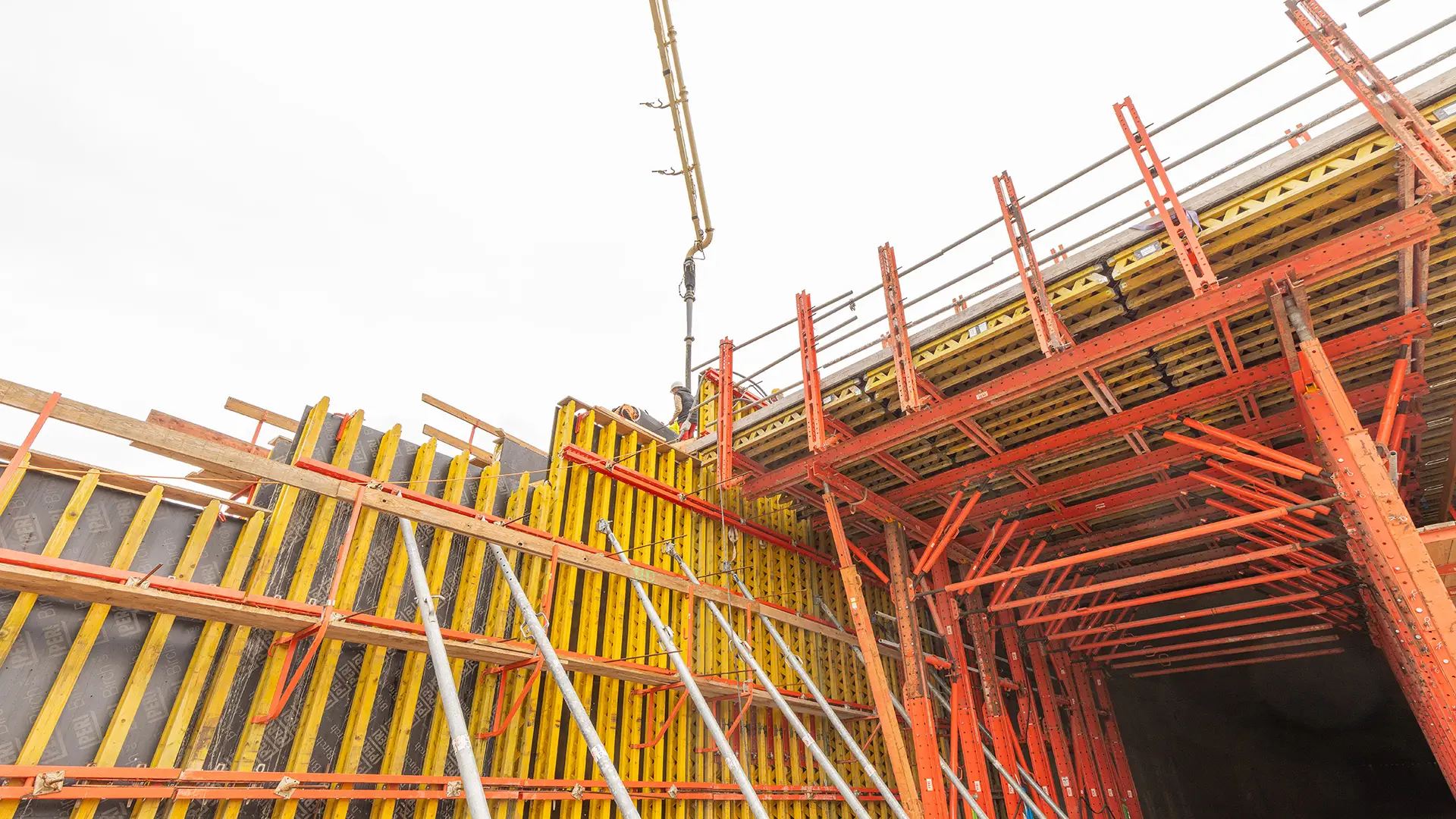
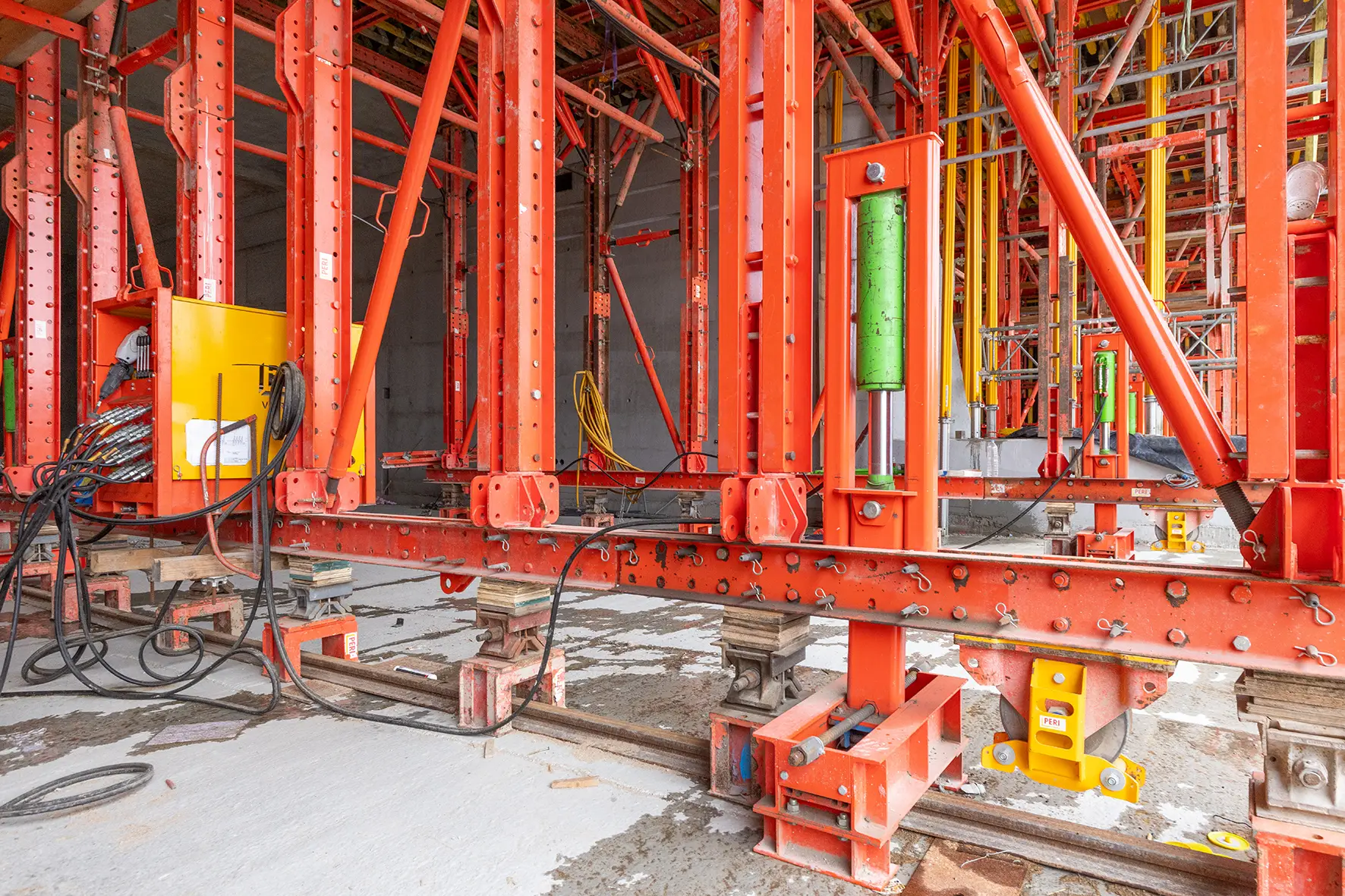
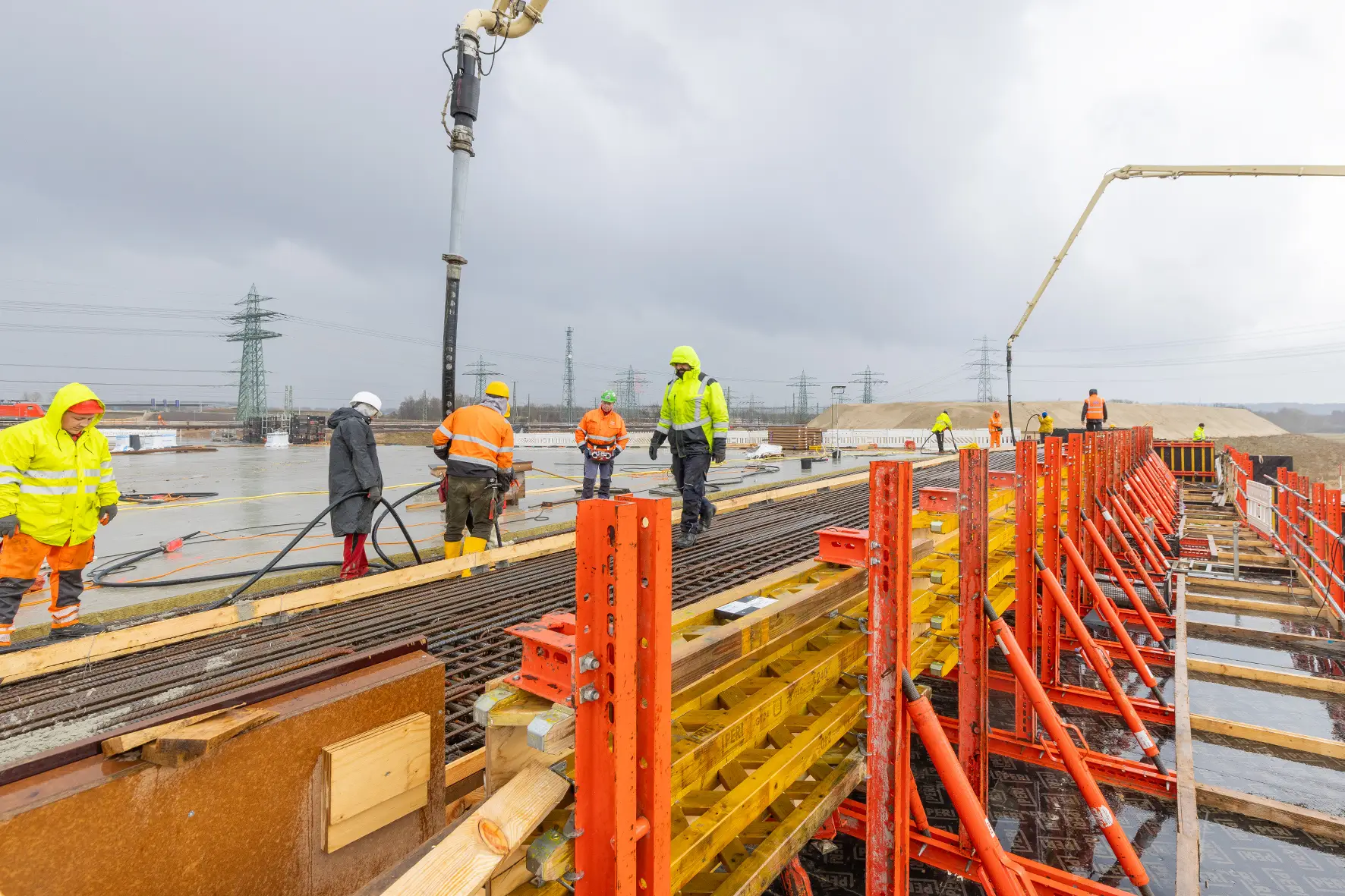
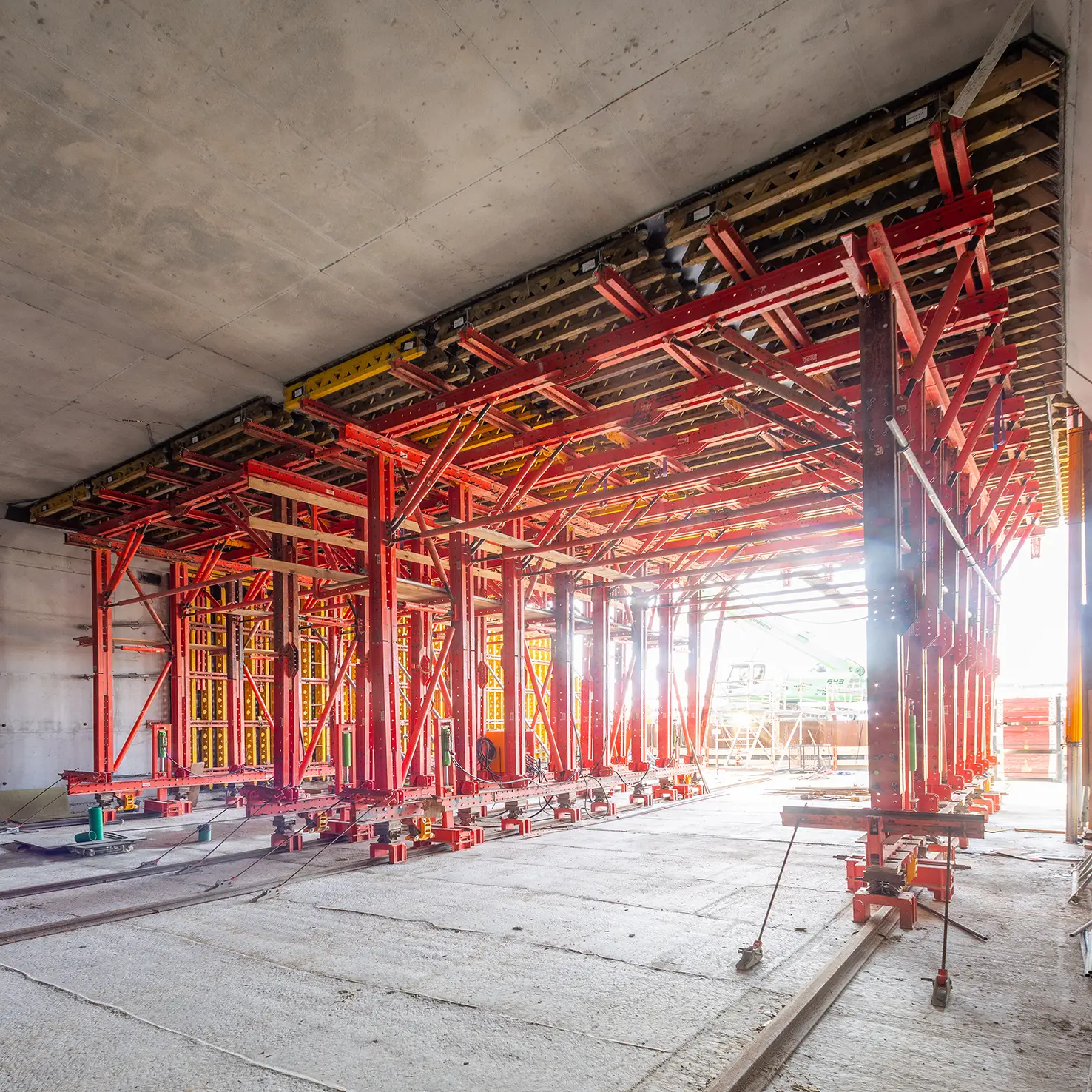
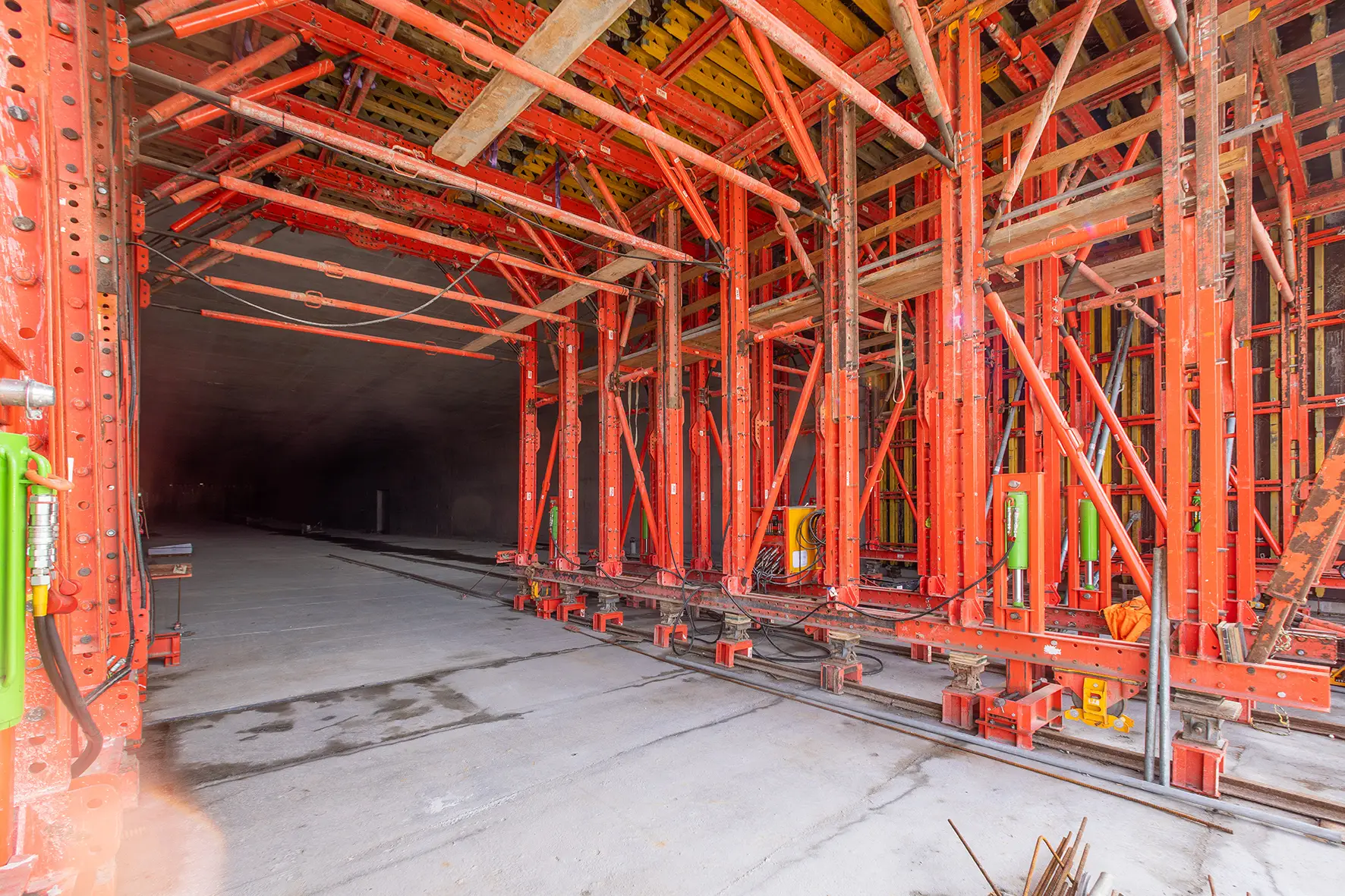
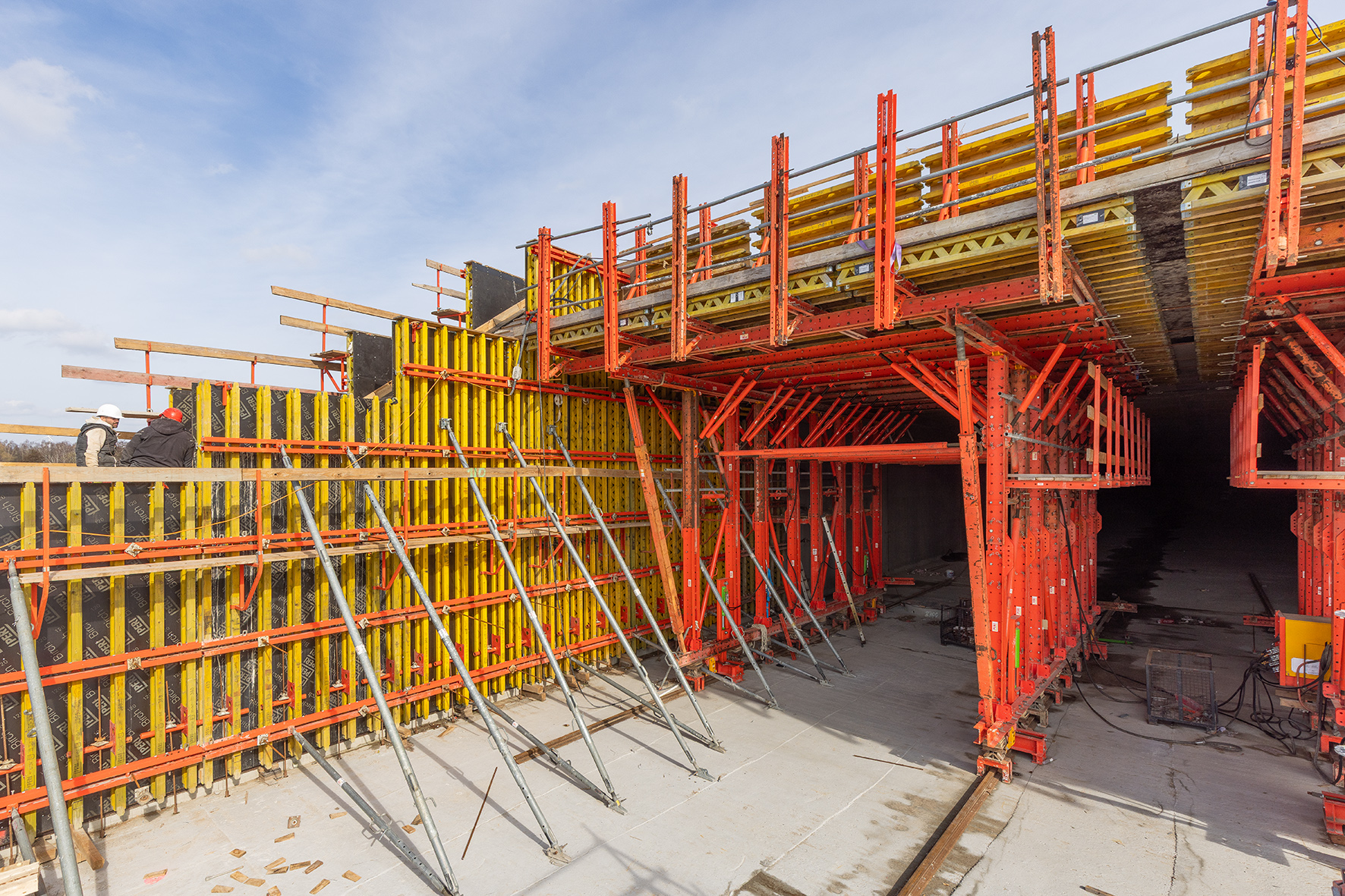
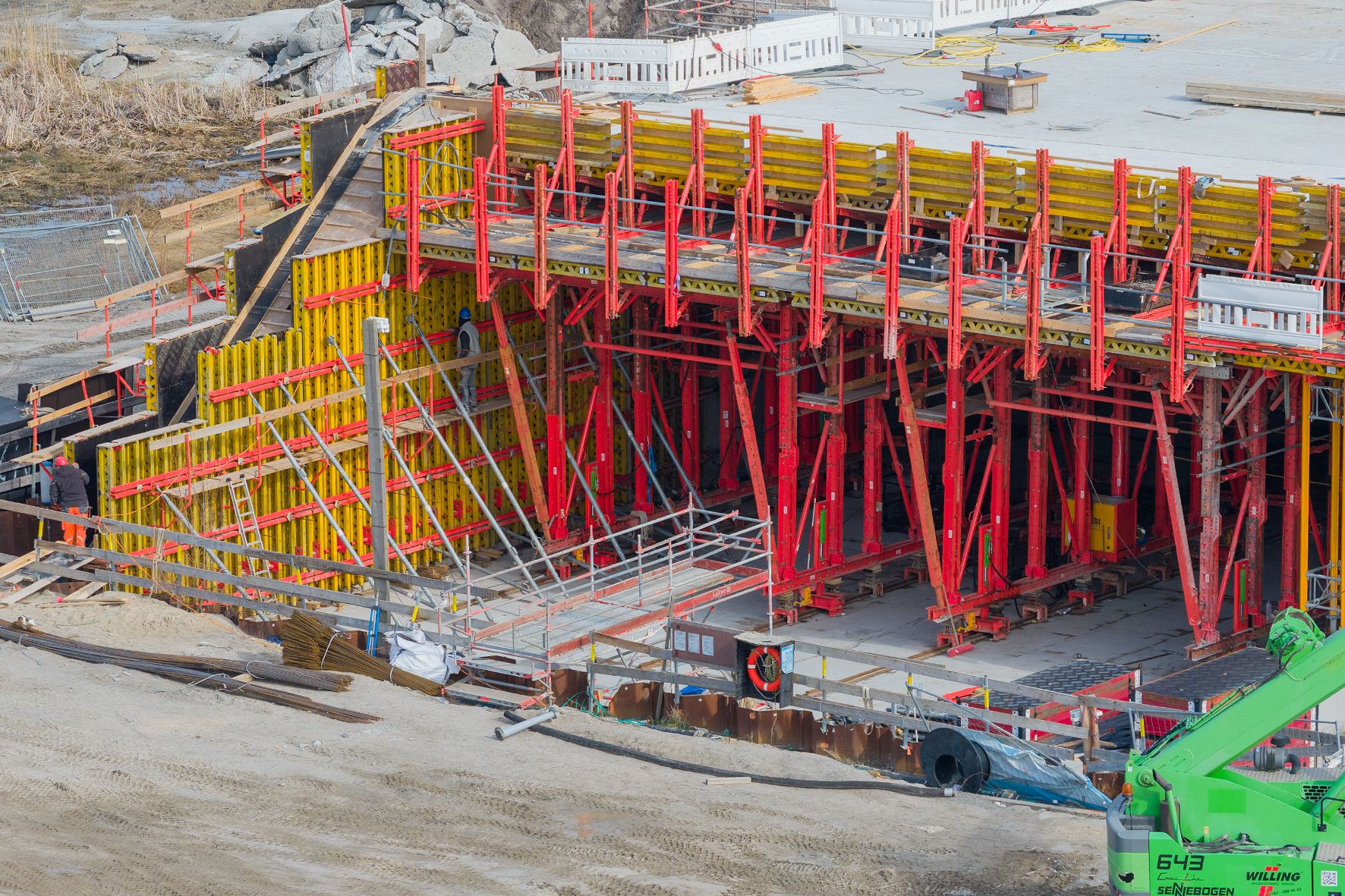
Additional requirements regarding construction methods, equipment use, and construction site logistics arise from working under existing high-voltage power poles and in the immediate vicinity of the operational harbor railway. Maintaining port railway operations during the construction period also requires dividing the excavation pit and tunnel structure into a western and an eastern construction section. The Harbor Railway Tunnel is designed for one-way traffic, with two main lanes in each direction. In addition, there are two entry lanes heading toward Stade and one exit lane heading toward Hamburg. The tunnel segments, which are generally 10 m long and over 30 m wide, are constructed in sections. First, the floor is poured, followed by the center wall. The completion of a tunnel segment involves the simultaneous pouring of the outer walls and the ceiling. Another distinctive feature of this concrete construction is the creation of the trough sections using complex relief formwork.
In the future, four tracks of the Hamburg Port Railway will run through the tunnel: two through tracks and two siding tracks. In addition, the structural foundations are being laid for a possible future expansion of the track layout by the HPA. The project also includes extensive operational and drainage systems. At the eastern portal, an operations building, a firewater reservoir, an emergency storage basin, a stormwater pump station, and a sedimentation basin are being constructed. Another firewater reservoir is planned for the western portal.
Another unique feature of the project is the integration of soil management and landscaping: Excavated material from the construction pits of the harbor rail tunnel is being reused to build the green bridge. This includes a bat flight route, a farm road, a green corridor connecting the existing green corridors, and a landscaping feature adjacent to the south. The Hafenbahn Tunnel thus combines, within a confined space, sophisticated engineering and specialized civil engineering with road and rail infrastructure, as well as high demands on the construction site, dewatering, and construction sequencing—all while Hafenbahn operations continue.